ETU NSW/ACT Secretary Allen Hicks and Organiser Jacob Kennedy attended the International Union of Elevator Constructors (IUEC)’s Global Safety Summit in the US last month, presenting an Australian perspective on lift safety, which in many respects is decades ahead of the regulations and safety laws in other countries.
While there is always room to improve, Allen Hicks attributes the decades of strong union campaigns focused on safety in the Australian lift industry as the reason for our stronger safety regulations and work health and safety laws. While wages may be higher in other countries, such as in the US, the ETU was able to share our model of improving safety, for example by including safety claims in our enterprise agreements, rather than relying on state or federal WHS legislation.
The lift industry is dominated by four multi-national companies: Schindler, Otis, Kone and TK Elevator/ Thyssenkrupp, so understanding how these companies operate in different countries within different legislative and industrial landscapes can be really beneficial for unions to understand what is truly possible and to work together and support each other.
“Sometimes a company might say that this claim or entitlement is not possible during EBA negotiations, but if we know that it is a standard inclusion for agreements in other countries, for example, it gives us a stronger bargaining position to demand that claim,” said Jacob. It allows us to see how bargaining works in other countries too, and adopt approaches that will strengthen our own members’ rights here in Australia.
Unions in one country can also influence outcomes in another country. For example, the IUEC General President sent an open letter to the CEO of Schindler in support of electrical workers in New South Wales while they were bargaining. It helped to apply international pressure on a domestic agreement and better outcomes for those workers.
Other benefits include sharing information about equipment, for example if there is a systemic issue with common tools or equipment in lifts, we can advise members on safety or to stop using that equipment until it is deemed safe.
It also helps us understand better how these multinational companies function, which is essential in a globalised economy.
The ETU will continue to strengthen and build relationships and ties with international unions and keep lines of communication open with officials globally so that our local members get the best deal possible.
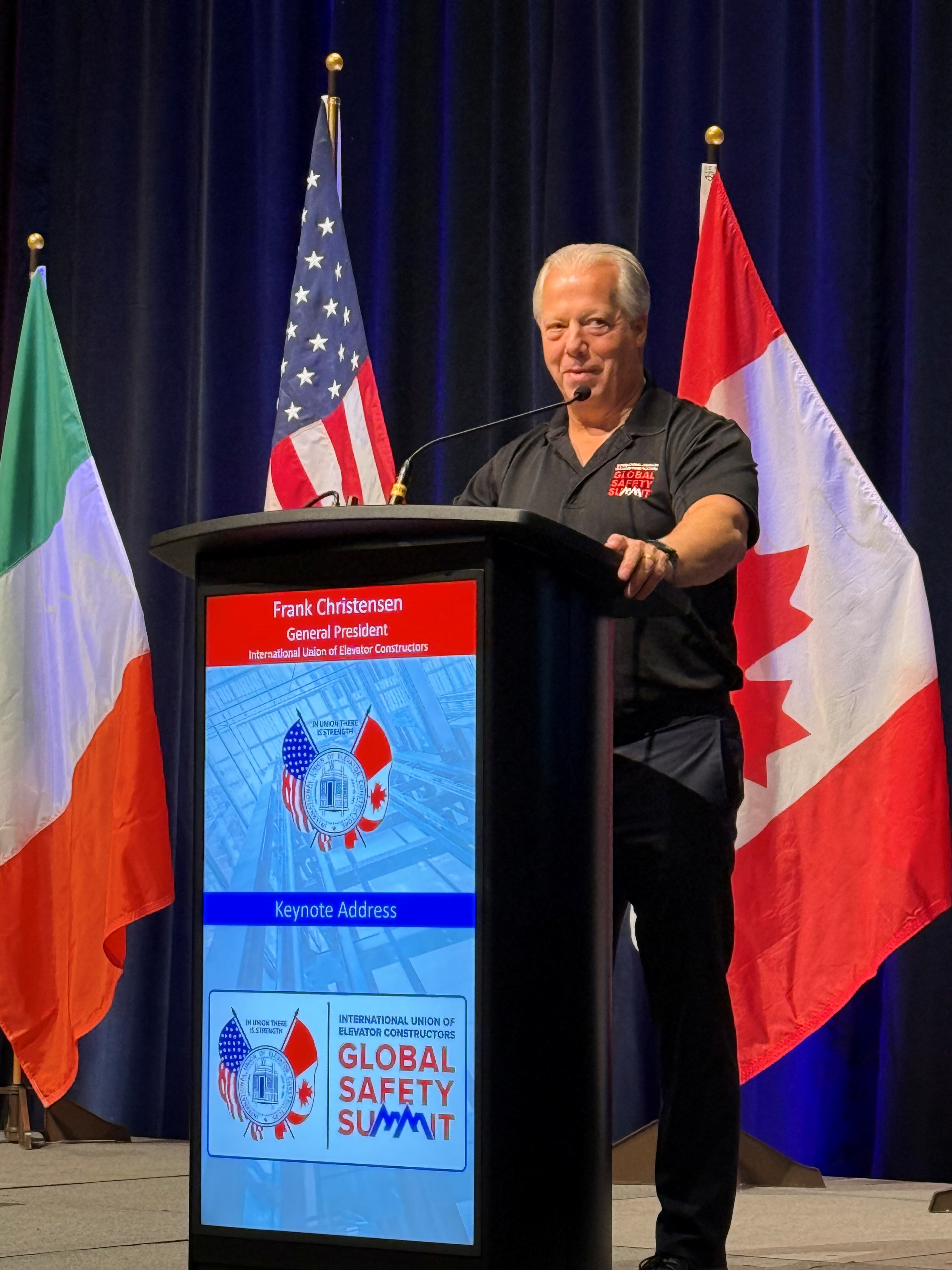
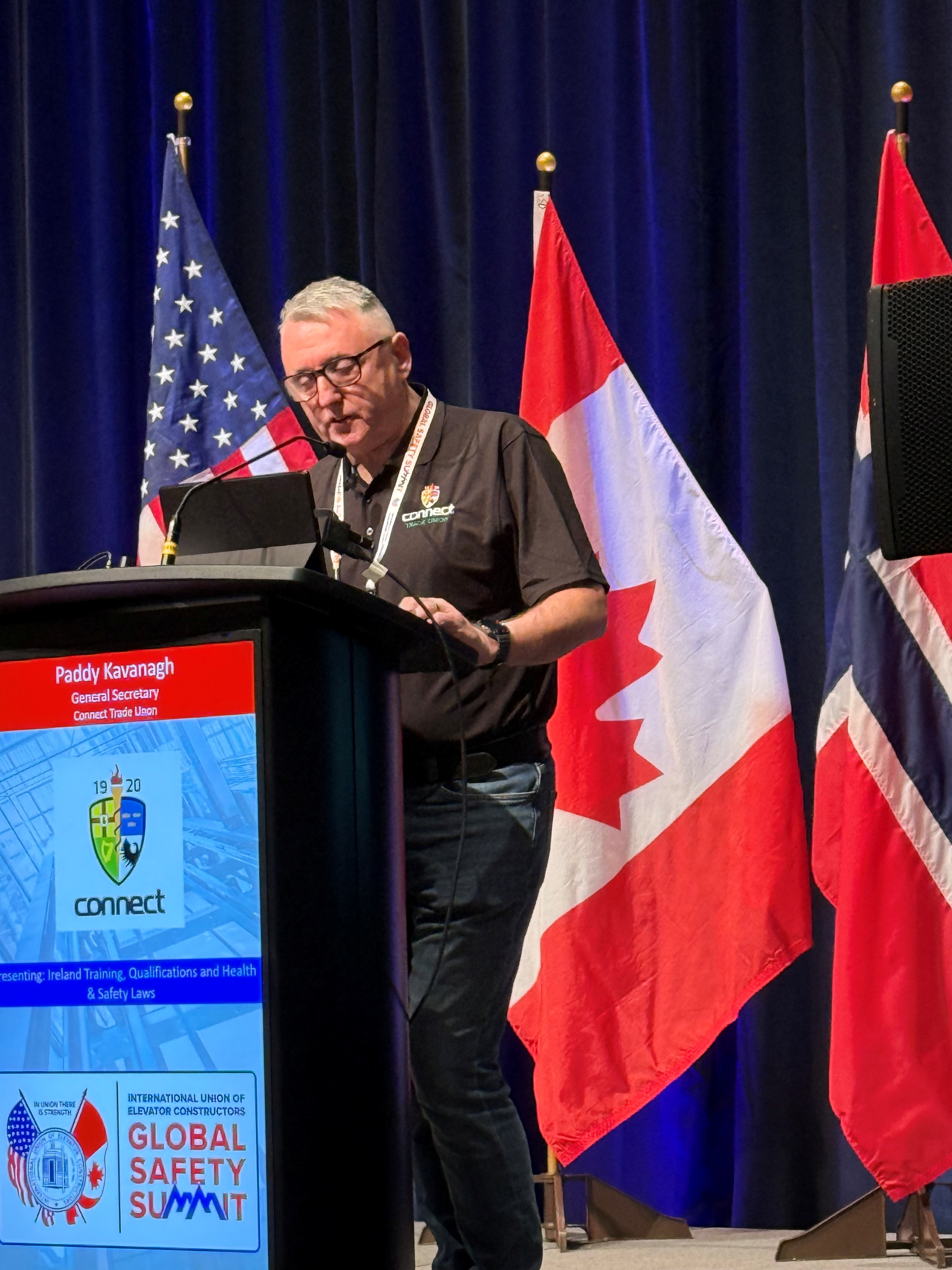
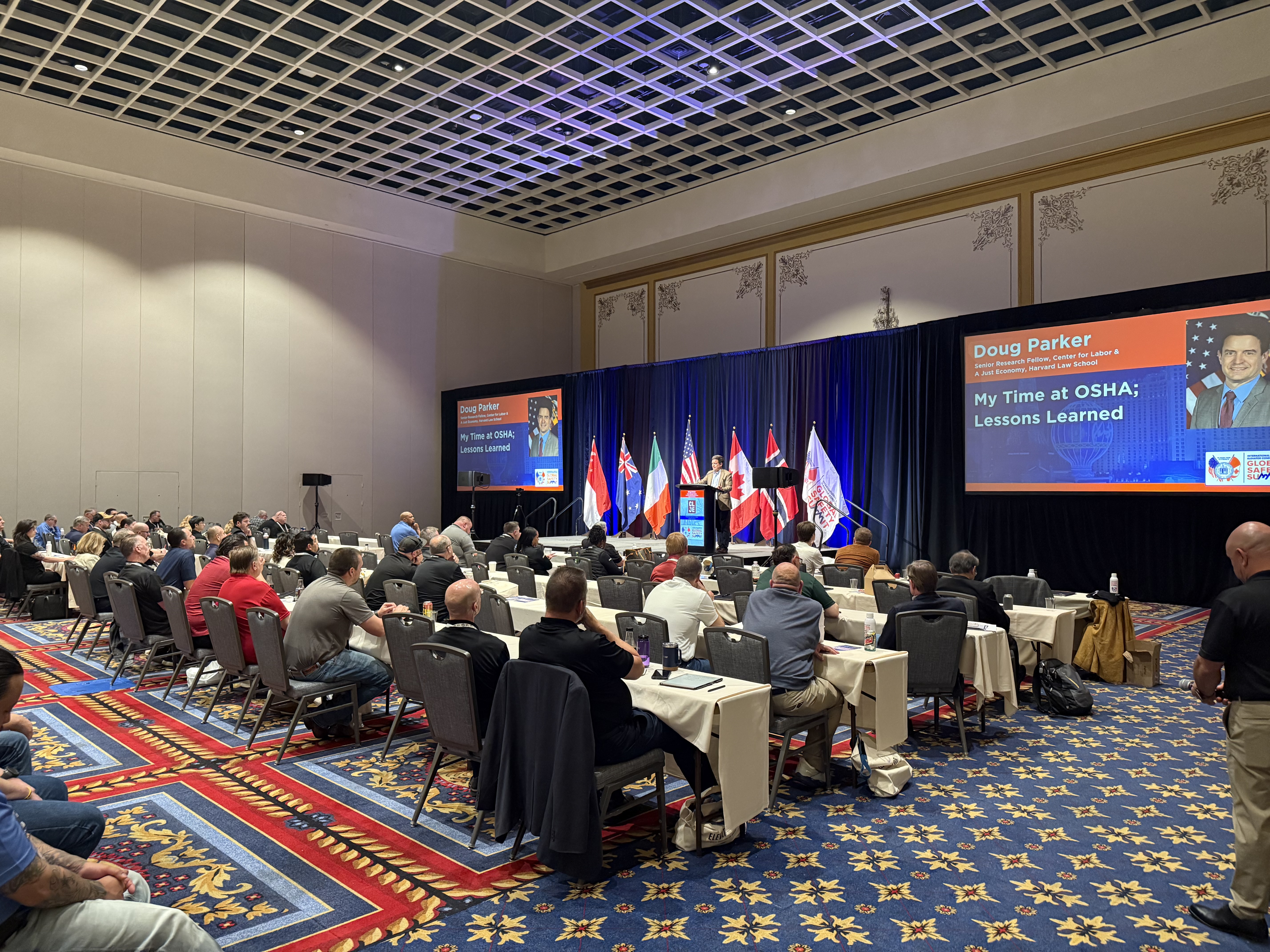
Pictured, from left:
Frank Christensen, General president of the International Union of Elevator Constructors
Paddy Kavanagh, General Secretary at Connect Trade Union, Ireland
The conference room